

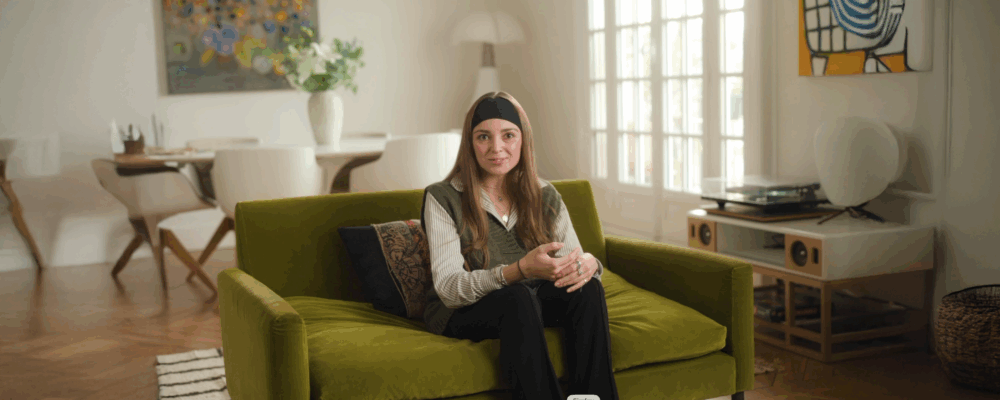
Jade’s Fight Against Ewing Sarcoma
At 23, Jade is a fifth-year medical student. But her journey is far from ordinary.
Ten years ago, at just 13, she was diagnosed with Ewing sarcoma, a bone cancer located at the bottom of her spine.
A Cancer Diagnosis That Changes a Teenage Life
It all began in February, when Jade was in eighth grade. She started to feel pain in her leg. The first doctors she saw thought it was due to sports, muscle soreness, then growth. “It’s a particular age, between childhood and adolescence, the age when you’re building yourself,” she explains.
Several months passed before a kinesiologist discovered a lump in her back. Everything moved very quickly afterward: X-ray, MRI, then a biopsy at Necker Hospital that same afternoon. The diagnosis fell: Ewing sarcoma.
One Year of Intensive Treatment for a Pediatric Cancer
Jade then began an exhausting one-year journey: chemotherapy, radiotherapy, and major surgery around the sacrum.
“They told me: ‘Jade, you have a mean lump, you’re going to need treatments that will make you lose your hair,’” she recalls.
At 13, understanding the gravity of the disease wasn’t immediate. “Why do I have to do something that will make me feel even worse in order to get better?” the young girl wondered. Little by little, seeing her parents’ worry and the impact on her loved ones, Jade realized the seriousness of the situation.
After the treatments, a long and particularly intense rehabilitation period began, especially because of the tumor’s location in her back.
Cured, but Not Without After-Effects
The Reality of Remission
Today, Jade has been officially cured for a few months, after 10 years of remission. On the oncological level, everything is fine. But the reality is more complex.
“Yes, I’m cured on paper, but in real life, it’s still so present,” she confides. Jade lives with permanent neurological and motor sequelae in her lower limbs. “My back hurts every day. I think there isn’t a single day without pain.”
Life After Cancer: A Little-Known Struggle
Jade’s story shows that remission does not mean going back to life as it was before. “The aftermath can be just as difficult as the during,” she explains. “Just because you’re cured doesn’t mean everything is fine and we stop talking about it.”
Physical after-effects come with a psychological journey as well: accepting that these side effects will remain for life, juggling medical school, a body that still requires attention, and her personal life.
“It’s true that today I’m out of all that, but it still feels very present,” Jade says. Yet she remains determined: “If it hadn’t happened, I know I wouldn’t be the person I am today.”
From Patient to Future Doctor: An Inspiring Path
Turning Her Experience into a Calling
Jade’s decision to study medicine often surprises people. Many former patients feel aversion toward hospitals — but not her. “The hospital is where I feel good. It’s a very strange feeling,” she admits.
Now in her fifth year of medical school, Jade is preparing to become a resident. “I tell myself that in a few years, I’ll be a resident and I’ll be in their place,” she says, thinking of those who cared for her. “It’s one of my greatest prides.”
A Message of Hope for Young Patients
“I’d like my story to help at least one child think: she was sick as a teenager, but at 23 she lives with it and she’s doing well,” says Jade.
Her message is clear: “After the rain, there is always sunshine.” She wants to show young patients currently in treatment that there is a future, that life can be beautiful despite the sequelae.
“I never held myself back because of this,” she says. “You can do so many things afterward. Life is really beautiful afterward.”
Why We Must Continue to Support Pediatric Cancer Research
Curing Is Not Enough — We Need to Cure Better
Jade’s story perfectly illustrates why research on pediatric cancers remains vital. Today, although survival rates have improved to around 80%, long-term after-effects remain a reality for many survivors.
“If I hadn’t had surgery, maybe I wouldn’t be here today. So in the end, luckily I had it,” Jade acknowledges. “But research must continue. We need to understand how to treat while also limiting the long-term impacts on young people’s futures.”
The Challenges of Pediatric Oncology Research
Childhood and adolescent cancers have important specificities:
-
They differ from adult cancers
-
Treatments must be adapted to growing bodies
-
The psychological impact on developing young people is significant
-
Long-term follow-up requires dedicated resources
Research must therefore advance on several fronts: developing more targeted and less toxic treatments, improving support during treatment, and ensuring better follow-up after recovery.
Support During and After Cancer: A Crucial Need
Jade particularly stresses the importance of post-cancer support:
“When you’re in treatment, you’re very well monitored. Once you start getting better, you’re kind of left on your own.”
After-effects of childhood cancer treatments can be:
-
Neurological and motor
-
Cardiac or pulmonary
-
Hormonal and growth-related
-
Cognitive
-
Psychological and emotional
“It’s important that support continues to develop and that we dare to say that the after is sometimes hard,” says Jade.
Let’s Join Forces Against Childhood and Adolescent Cancers
Every Donation Helps Advance Cancer Research
Jade’s testimony reminds us that behind every statistic is a child, a teenager, a family whose life is turned upside down. In France, around 2,500 children and adolescents are diagnosed with cancer every year.
Pediatric oncology research suffers from a severe lack of funding. Unlike adult cancers, pediatric cancers represent a market too small to interest the pharmaceutical industry. That’s why organizations like Imagine for Margo play a crucial role.
What Your Support Makes Possible
Your donations help to:
-
Fund innovative research projects for less toxic treatments
-
Develop targeted therapies with fewer side effects
-
Improve quality of life during and after treatment
-
Provide psychological support to young patients and their families
-
Train researchers specialized in pediatric oncology
Take Action Now: Together, Let’s Accelerate Cures
Jade echoes Margo’s inspiring message: “Go. Fight. Win.”
This rallying cry is not only for young patients fighting the disease. It is also for all those who, through their commitment, help research move forward.
Your donation can make a difference. It can help a child tomorrow recover with fewer after-effects. It can give a family hope for gentler treatment. It can allow a teenager to look toward the future with peace of mind.
How to Get Involved in the Fight Against Cancer
-
Make a donation to fund pediatric cancer research
-
Share Jade’s story to raise awareness
-
Engage your company in a partnership with Imagine for Margo
-
Take part in the association’s events
-
Become a volunteer to support our actions
Every gesture counts. Every euro donated brings researchers closer to a breakthrough. Every share raises awareness and builds collective consciousness.
Together, let’s continue the fight against cancer so that every child can not only be cured, but be cured better.