

Yannick Explains – Episode 3: Why Do Children Get Cancer?
Why do children get cancer? It is one of the most heartbreaking and frequently asked questions among families affected by childhood cancer.
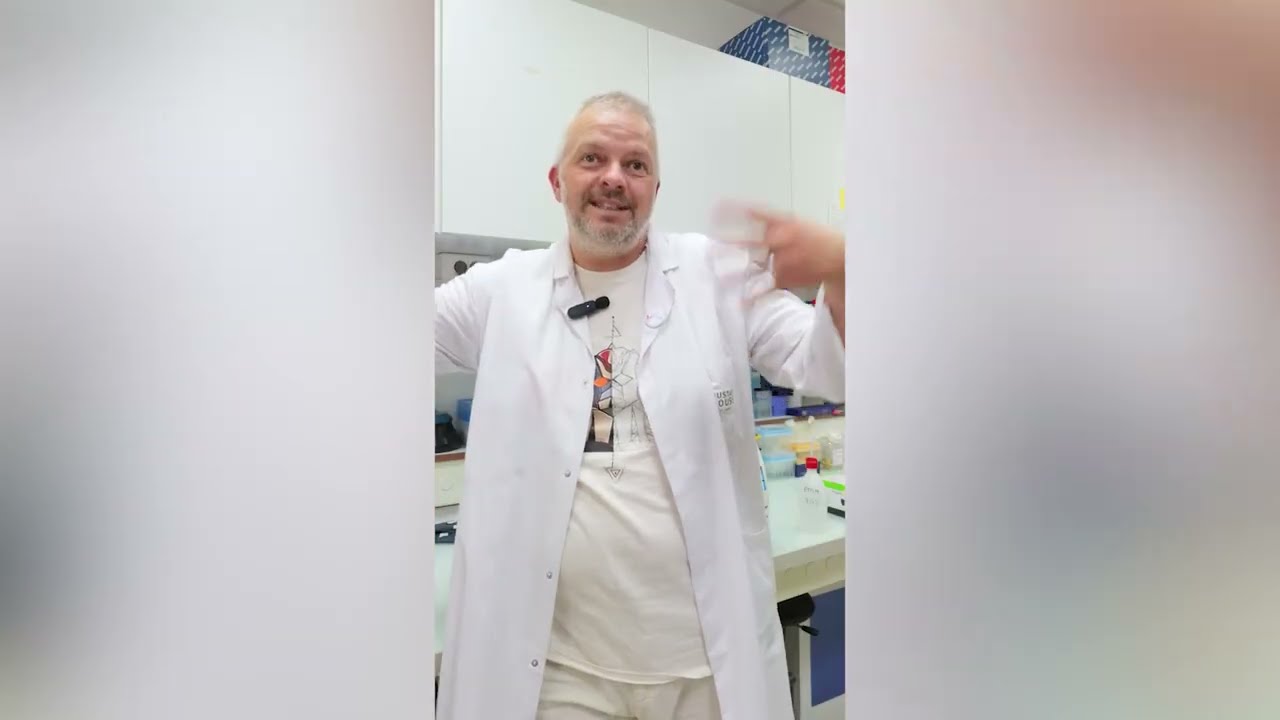
In this third episode of our series “Yannick Explains”, Yannick Tanguy, Head of Research at Imagine for Margo, explores the origins of childhood cancer and its genetic causes.
Filmed at Gustave Roussy, in Dr. Thomas Mercher’s laboratory, this episode is the first of a two-part exploration. Next month, the series will examine what science currently knows about the potential impact of environmental factors and pollutants on childhood cancer.
Childhood Cancer vs. Adult Cancer: Two Fundamentally Different Diseases
The word “cancer” covers a wide range of diseases. One of the most important distinctions is the difference between cancers affecting adults and those affecting children.
In adults, cancer most commonly develops through the gradual accumulation of genetic mutations. These mutations are associated with aging and exposure to environmental or lifestyle factors, including tobacco, alcohol, certain viruses, and pollutants.
In children, however, cancer develops through very different mechanisms.
Childhood cancers originate from early developmental processes, often beginning during embryonic or fetal development.
Although pediatric tumors generally contain fewer genetic alterations than adult tumors, these changes affect biological mechanisms closely connected to the development of an organism that is still immature.
This is why childhood cancer research cannot simply rely on adapting discoveries made in adult oncology.
Understanding pediatric cancers requires dedicated research based on tumors from children themselves.
This is one of the key missions of Imagine for Margo.
How Childhood Cancers Can Begin During Embryonic Development
To understand the origins of childhood cancer, researchers must examine the cells from which these tumors develop.
Unlike many adult cancers, pediatric cancers often arise from progenitor cells: immature cells that multiply rapidly before specializing to form specific tissues or organs.
When a genetic alteration occurs in one of these cells, it can prevent the cell from maturing properly.
The cell can no longer develop into its intended specialized form. As a result, it may fail to receive the biological signals that normally tell it to stop dividing.
These immature cells exist only temporarily during embryonic development.
This helps explain why certain cancers are almost exclusively pediatric: the cells from which they originate have largely disappeared by adulthood.
High-Grade Gliomas and Histone H3 Mutations
High-grade gliomas, particularly aggressive brain tumors, provide a striking example.
These tumors frequently contain mutations affecting proteins known as histones H3, which help package DNA inside the cell nucleus.
Such mutations are extremely rare in adults.
This suggests that their cancer-causing potential depends on a specific stage of brain development.
In other words, the same genetic abnormality occurring at a different stage of life would not necessarily have the same consequences.
Medulloblastoma and the Rhombic Lip
Medulloblastoma, another type of childhood brain tumor, illustrates a similar phenomenon.
The cell from which this cancer originates is found in the rhombic lip, an embryonic structure involved in the formation of the cerebellum.
This means that the cancer can originate from a cell that exists specifically during embryonic development.
Development: A Period of Genetic Vulnerability
To summarize, the genetic alterations responsible for childhood cancers tend to occur:
During periods of intense development, particularly embryonic or fetal life.
In immature cells that exist only temporarily.
When cells are naturally undergoing rapid proliferation.
In other words, the body’s development itself creates a period of genetic vulnerability during which certain childhood cancers can arise.
Three Possible Causes of Genetic Alterations in Children
This leads to another essential question: why do these genetic alterations occur, and where do they come from?
In Episode 3 of “Yannick Explains”, Yannick Tanguy identifies three main sources.
1. DNA Replication Errors During Millions of Cell Divisions
During embryonic development and childhood growth, certain groups of cells divide millions of times within a relatively short period.
Every time a cell divides, its DNA must be copied in its entirety.
Our cells have highly effective mechanisms for identifying and repairing genetic errors.
However, such intense cellular activity inevitably creates opportunities for DNA replication errors.
Yannick illustrates this with a simple comparison: the faster and more frequently you drive a car, the greater the likelihood of damaging it.
Another factor is the enormous amount of energy required for growth.
High energy production also generates cellular waste products, which can contribute to genetic mutations if the resulting damage is not repaired quickly enough.
2. Epigenetics: When Cells Lose Their Identity
Some childhood cancers also involve significant epigenetic alterations.
Epigenetics refers to the mechanisms that control which genes are accessible or inaccessible, allowing cells to activate the appropriate biological programs at different stages of their lives.
These mechanisms coordinate the activation and silencing of thousands of genes.
They are essential for key processes such as:
- Cell proliferation.
- Cell differentiation.
- The development of a specific cellular identity, such as becoming a skin cell or a liver cell.
In childhood cancers, researchers frequently observe alterations affecting epigenetic regulators.
As a result, a cell may fail to develop its intended identity.
Unable to mature properly, it remains in an immature state and continues multiplying.
This mechanism contributes to the development of certain childhood brain tumors.
3. Inherited Cancer Predisposition Genes: Around 10–15% of Cases
In some cases, genetic alterations are present from the very beginning of life.
These are known as cancer predisposition genes, and they are involved in approximately 10–15% of childhood cancer cases.
These genetic alterations can be inherited from parents.
However, inheriting a predisposition does not mean that a child will automatically develop cancer.
Instead, these alterations increase the likelihood that a cell will escape the body’s normal control mechanisms.
An additional genetic error may then be enough to trigger uncontrolled cell growth.
Understanding the Origins of Childhood Cancer: What We Should Remember
This episode highlights a fundamental point: childhood cancers are closely connected to human development.
During this extraordinary process, a single fertilized egg develops into an organism containing billions of cells.
With the exception of inherited predisposition genes, many of the genetic alterations involved in childhood cancers arise during the intense cellular activity of embryonic development or childhood growth.
Understanding these mechanisms is not simply a matter of advancing scientific knowledge.
By identifying the precise genetic abnormality responsible for a tumor, researchers can develop targeted treatments.
This is the principle behind precision medicine, which Yannick explored in Episode 2 of the series, dedicated to targeted therapies and genetic mutations.
The better we understand why childhood cancers develop, the better equipped we are to design more effective and less toxic treatments.
Environmental Factors and Pollutants: The Focus of Our Next Episode
Many families understandably wonder whether lifestyle choices, environmental factors, or exposure to pollutants could contribute to childhood cancer.
Researchers have been investigating these questions for several years.
In the next episode of “Yannick Explains”, our Head of Research will examine the current scientific evidence concerning the potential influence of environmental factors and pollutants on childhood cancer.
Join us next month to learn more!
“Yannick Explains”: Making Childhood Cancer Research Accessible
Every month, Yannick Tanguy, Head of Research at Imagine for Margo, breaks down an important scientific topic in pediatric oncology.
Through clear explanations and accessible language, the series aims to help families and the wider public better understand childhood cancer research.
Following two episodes filmed at Institut Curie, this third episode was recorded at Gustave Roussy, in Dr. Thomas Mercher’s laboratory.
Do you have a question about this episode or a suggestion for a future topic?
Leave us a comment below the YouTube video or on our social media channels. Your questions could inspire a future episode!
Frequently Asked Questions About Childhood Cancer
Why do children get cancer?
Childhood cancers often originate during the body’s development, sometimes as early as the embryonic or fetal stages.
They can develop from immature, rapidly dividing cells in which genetic alterations disrupt normal cell specialization and lead to continued proliferation.
What is the difference between childhood cancer and adult cancer?
Adult cancers generally result from genetic mutations that accumulate over time, influenced by aging and environmental or lifestyle exposures such as smoking and alcohol consumption.
Childhood cancers, on the other hand, are more closely associated with developmental processes.
They typically involve fewer genetic alterations, affecting mechanisms specific to an immature, developing organism.
Is childhood cancer hereditary?
In most cases, childhood cancer is not hereditary.
Inherited cancer predisposition genes are involved in approximately 10–15% of cases.
However, carrying such a genetic alteration does not automatically cause cancer. It increases the risk that certain cells may escape the body’s normal control mechanisms.
What is epigenetics?
Epigenetics refers to biological mechanisms that regulate which genes are accessible and active according to a cell’s needs.
When these mechanisms are disrupted, cells may fail to acquire their intended identity and continue multiplying.
Such alterations contribute to the development of certain childhood brain tumors.
Why do some cancers occur almost exclusively in children?
Certain childhood cancers originate from immature cells that exist only temporarily during embryonic development.
One example is medulloblastoma, which can arise from cells associated with the rhombic lip, an embryonic structure involved in the development of the cerebellum.
Support Childhood Cancer Research
Every year in France, approximately 2,500 children, teenagers, and young adults are diagnosed with cancer, representing around seven new diagnoses every day.
Sadly, approximately 500 of them will not survive.
For 15 years, Imagine for Margo has been funding research programs to better understand childhood cancers and develop more effective, less toxic treatments.
Our ultimate goal is to help cure all children, teenagers, and young adults affected by cancer.
Understanding why cancer develops is the first step toward treating it more effectively.
You can help researchers make progress by:
- Making a donation to support childhood cancer research.
- Sharing this video to raise awareness and encourage others to support the fight against childhood cancer.
- Discovering all the ways you can help Imagine for Margo.
Together, let’s keep advancing research and giving children a better chance of recovery.